
Have you noticed that your hair just won’t grow past a certain length, even though you are not losing much of it? Chances are it is breaking before it gets the chance. Short snapped strands, split ends, and frizz that never settles are the usual clues, and the culprits are often everyday things like rough towel drying or daily heat styling. Learning how to prevent hair breakage is simpler than it sounds. Start by spotting what is hurting your hair and fixing a few small things.
Hair breakage is when a strand snaps somewhere along its length instead of falling out from the scalp. You may see short pieces, uneven ends, or rough, knotty hair.
Each strand has a thin outer layer that works like a shield. Once it is damaged, hair snaps easily when you brush or style it. A damaged strand cannot return to its original condition, but gentle hair care can help prevent further breakage.
Heat styling, bleaching, hair colour, tight hairstyles, and rough brushing are the big ones. Dry hair makes things worse because it tangles more and snaps more. Wrong products, constant rubbing, poor nutrition, and some health problems can play a part too. Once you know the reason for the hair breakage in your case, you can fix that thing.
Hair breakage occurs when strands snap, leaving shorter pieces with uneven ends. Hair fall generally refers to shedding from the scalp, which may be part of the normal hair growth cycle or related to an underlying concern. Broken strands and shed hairs can sometimes look similar, so appearance alone may not tell you the cause.
Both can happen together but may need different approaches. Breakage can often be reduced with gentle hair care, but ongoing hair shedding or thinning may also be linked to factors such as genetics, hormonal changes, or a lack of certain nutrients.
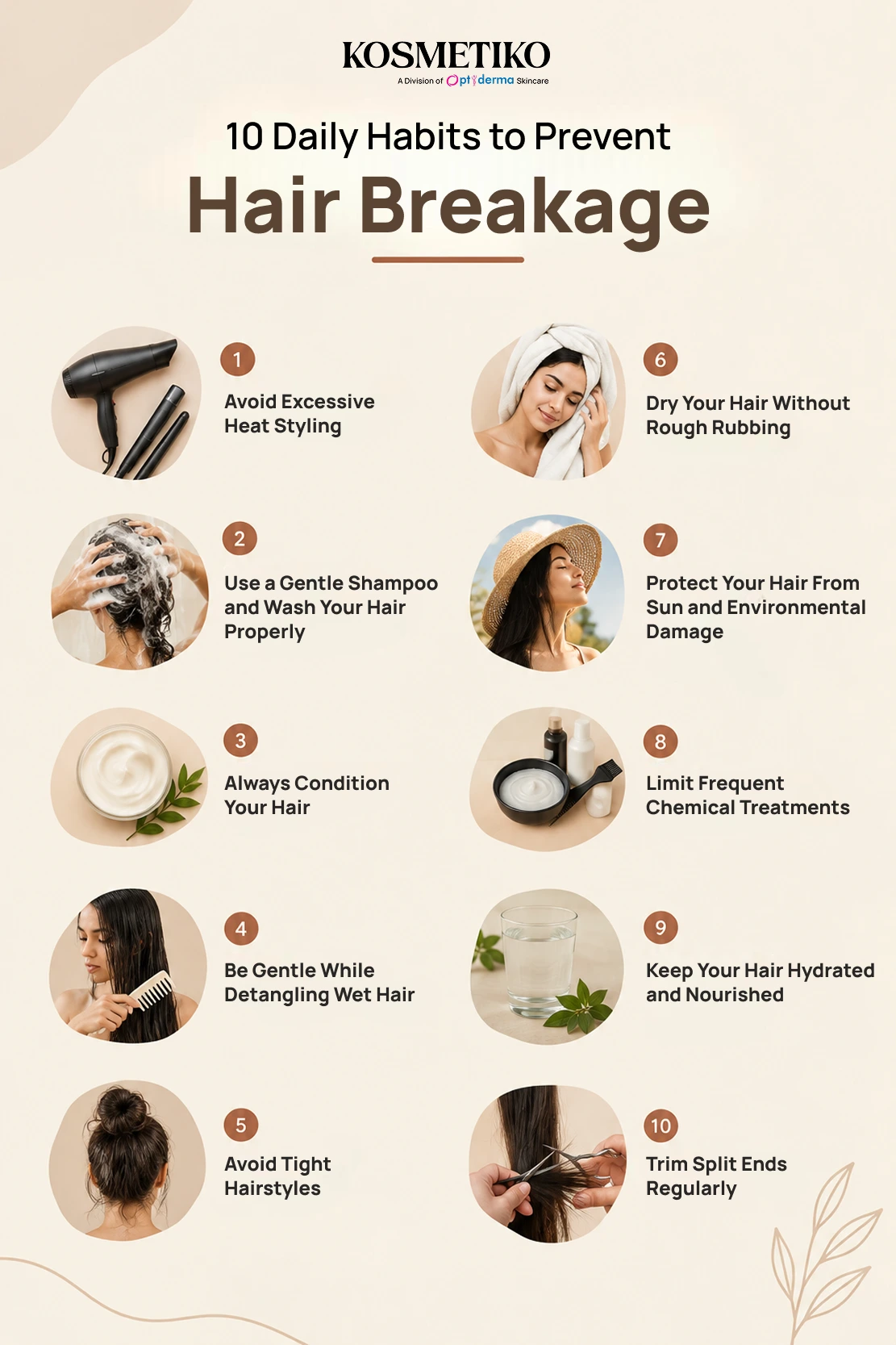
Straighteners, curling irons, and hot dryers weaken hair when you use them often or on high heat. Let your hair air dry when you can, use a heat protectant, and set the temperature to medium.
Pick a gentle shampoo that suits your scalp, and wash more often only if it gets oily or sweaty. Massage with your fingertips instead of scrubbing hard, then rinse well.
Using conditioner helps smooth your hair and makes detangling easier. Put it in the middle and ends after shampoo. If your hair knots up a lot, a leave in conditioner can help.
Wet hair breaks more easily, although curly hair is often easier to comb when it is damp and conditioned. Start from the ends and work upward slowly with your fingers or a wide tooth comb.
Tight ponytails, buns, and braids keep tugging at the same spots. Go for looser styles and soft hair ties. If a style hurts, loosen it, because constant pulling can lead to hair loss over time.
Rubbing wet hair with a towel creates tangles and breakage. Squeeze the water out and pat dry with a soft towel or an old cotton tee instead.
Sunlight and pool water may leave your hair feeling dry and less manageable. Cover your hair when outdoors for long periods and rinse it well after swimming.
Bleaching, colouring, relaxing, and straightening all weaken hair, and repeating them on treated hair adds to the damage. Leave long gaps between appointments and follow your stylist’s care tips.
Use a conditioner, leave-in product, or hair mask to make dry hair feel softer and easier to manage. These products improve hair texture but cannot restore broken strands.
Split ends look frayed and can travel higher up the strand. A trim removes the damaged part and keeps hair neat, though it won’t make hair grow faster.
We have all yanked a brush through a knot when in a hurry. It feels quick, but that is exactly where strands snap. Brush slowly, start from the ends, and use soft bristles. Avoid brushing hard when your hair is wet.
Wet hair is weak, and tossing on a pillow rubs it all night, leaving tangles and frizz. Let it dry a little before bed, or tie it loosely. A silk or satin pillowcase helps too.
Washing daily with a strong shampoo strips the natural oils that keep hair soft, and dry hair snaps faster. Wash when your scalp feels dirty and pick milder products. Strong gels and sprays can dry it out too.
Tight rubber bands and metal clips pull and cut through strands. Switch to soft fabric ties, and avoid tying your hair at the exact same spot daily.
Clean your scalp gently, apply conditioner to your hair lengths, and detangle slowly to avoid pulling or snapping strands. Before using hot tools, dry off extra water and add a heat protectant. Skip high heat on hair that is also coloured or chemically treated. If you are wondering how to stop hair breakage that keeps coming back, check your products and habits before adding anything new.
Hair needs enough protein, iron, zinc, and other nutrients to stay healthy. Add a variety of nutrient-rich foods to your meals, including pulses, dairy, eggs, nuts, seeds, vegetables, and whole grains.
Supplements aren’t always needed, and too much of some nutrients can be harmful. If you think you are missing something or notice unexplained thinning, talk to a doctor before taking any.
Handle your hair gently, avoid unnecessary heat, loosen tight hairstyles, and use a leave-in conditioner if needed. Notice whether particular tools or styles leave your strands increasingly tangled or fragile.
Wash as your scalp needs, condition after shampoo, and use a hair mask if your hair feels extra dry. Check for split ends. Oiling is optional, so do it only if it suits your scalp and hair type.
See a dermatologist if breakage continues even after you change your habits, or if you notice sudden thinning, bald patches, an irritated scalp, or painful spots. The causes of hair thinning and breakage can be different, and a doctor can tell whether the problem is damaged strands, a scalp issue, or another type of hair loss.
Hair breakage in men can come from heat, chemical treatments, or grooming habits, just like in women. But a receding hairline or slow thinning may be pattern hair loss, not just breakage. Knowing how to treat hair breakage starts with finding the real cause.
Learning how to reduce hair breakage doesn’t need a long routine. Softer washing, regular conditioning, careful combing, and less heat already do a lot. A broken strand can’t be repaired, but steady habits stop more damage. Pick the ones you can actually follow, and see a professional if breakage or thinning doesn’t stop.
Start with small changes to your daily routine. Use a suitable conditioner, detangle gently, avoid tight hairstyles, and limit heat styling. These habits can help reduce breakage without adding too many products to your hair care routine.
The best approach is to identify what is damaging your hair. If heat styling, rough brushing, or chemical treatments are the cause, reducing them can help prevent further breakage. Regular conditioning and gentle handling also make hair easier to manage.
Hair may break easily when it becomes dry, tangled, or weakened by frequent heat styling, bleaching, or chemical treatments. Tight hairstyles and aggressive brushing can also contribute. If breakage continues despite changing these habits, consider consulting a dermatologist to check for other possible causes.
Use a shampoo suited to your scalp and avoid scrubbing your hair lengths aggressively. Apply conditioner after shampooing, gently remove excess water with a towel, and detangle carefully. Avoid rubbing wet hair roughly, as this can increase friction and breakage.
Hair oil may help reduce friction and make some hair types easier to manage, which can lower the risk of breakage during grooming. However, oiling alone cannot repair damaged strands or address every cause of breakage. Choose an oil that suits your hair and scalp, and stop using it if irritation occurs.
Reduce how often you use straighteners, curling irons, and hot dryers. Apply a heat protectant before styling, use a lower temperature, and avoid repeatedly passing hot tools over the same section. Giving your hair regular breaks from heat can help minimise further damage.
Include protein-rich foods such as eggs, lentils, beans, dairy products, nuts, and seeds, along with vegetables and whole grains. A balanced diet helps provide nutrients needed for healthy hair. If you suspect a nutritional deficiency, seek medical advice before taking supplements.
Conditioners and hair masks can improve softness, reduce tangling, and make damaged hair easier to manage, but they cannot permanently restore a broken strand. Trimming may help remove split ends, though you do not always need a haircut for every type of damage. Gentle care can help protect the remaining length from further breakage.
 |
 |
I agree to all T&C and Replacement & Return Policy.


